This project documents and analyzes six months of my personal web browsing history, treating digital behavior as a form of observable record. As daily life increasingly unfolds online, these traces begin to form a parallel layer of lived experience.
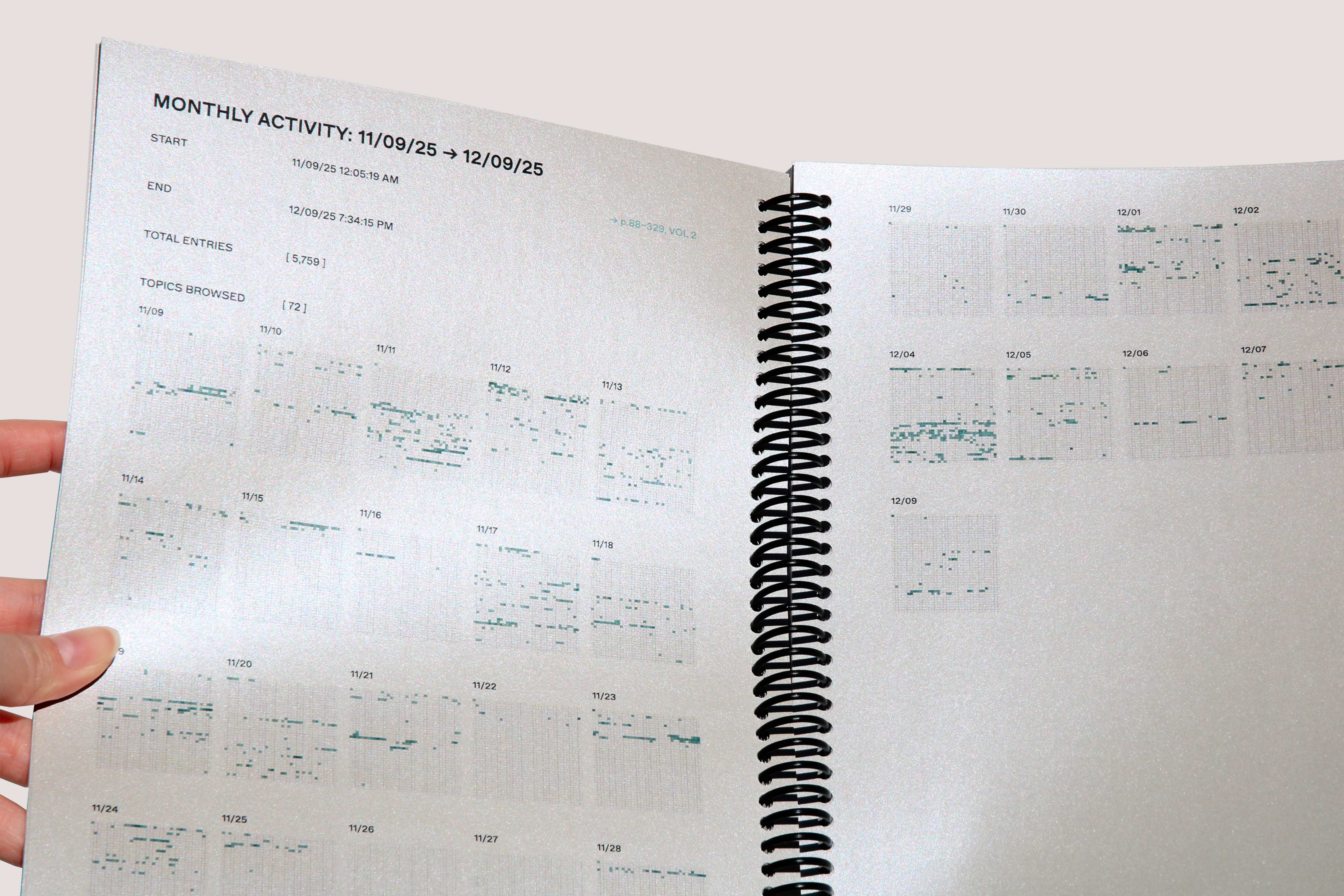
By translating browser data into physical formats, the project explores how patterns of access, frequency, and topic can construct a portrait of behavior over time.
Design
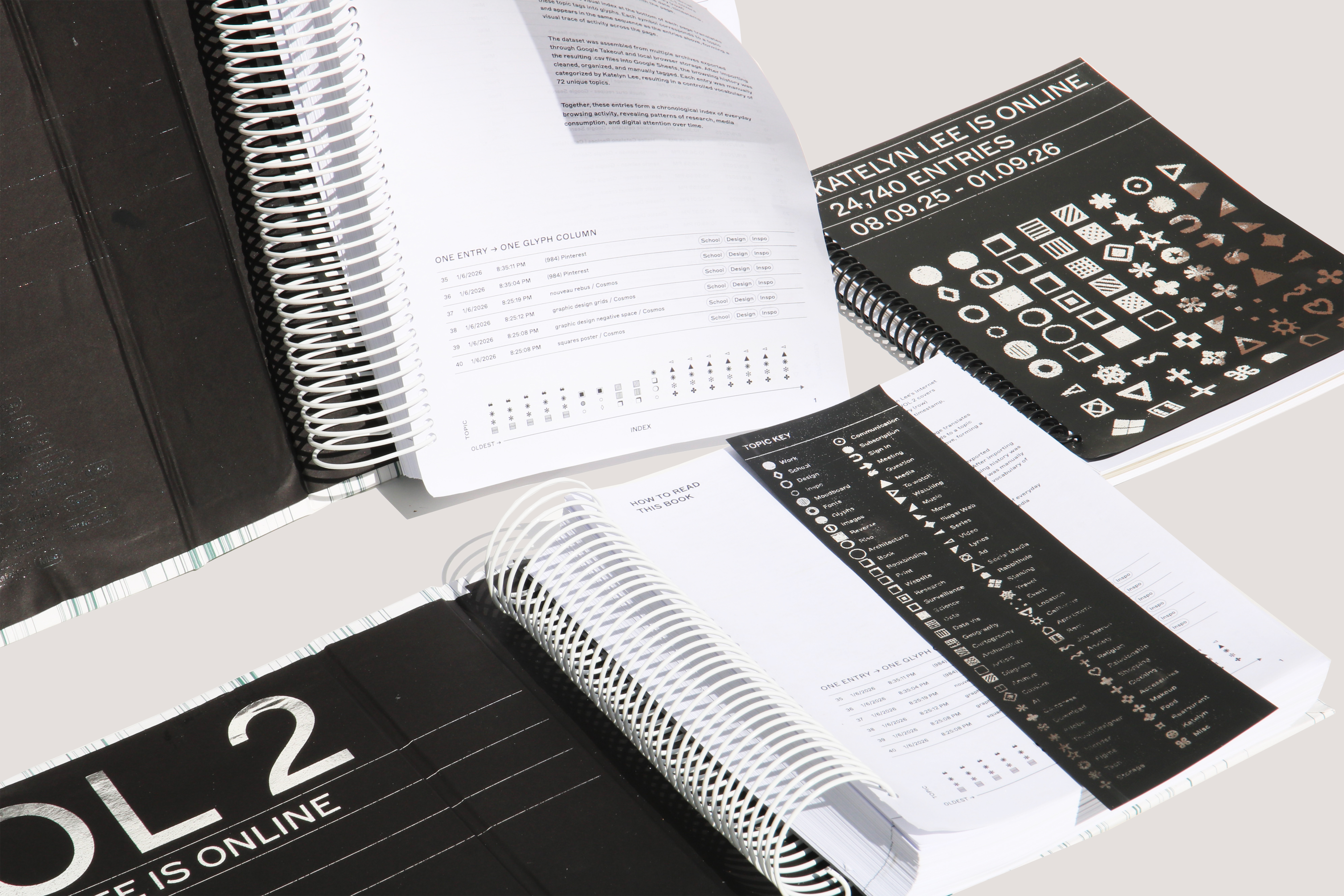
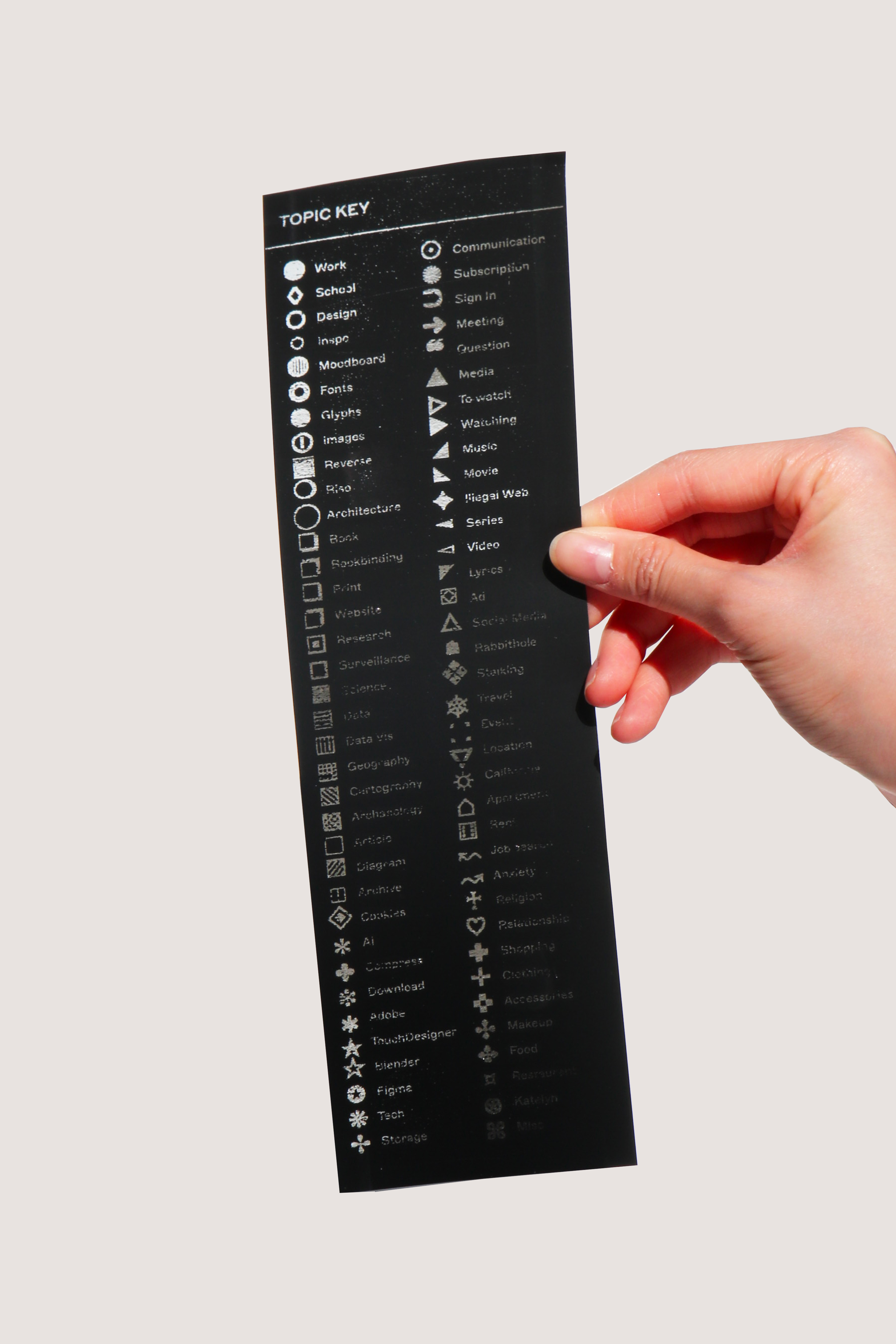
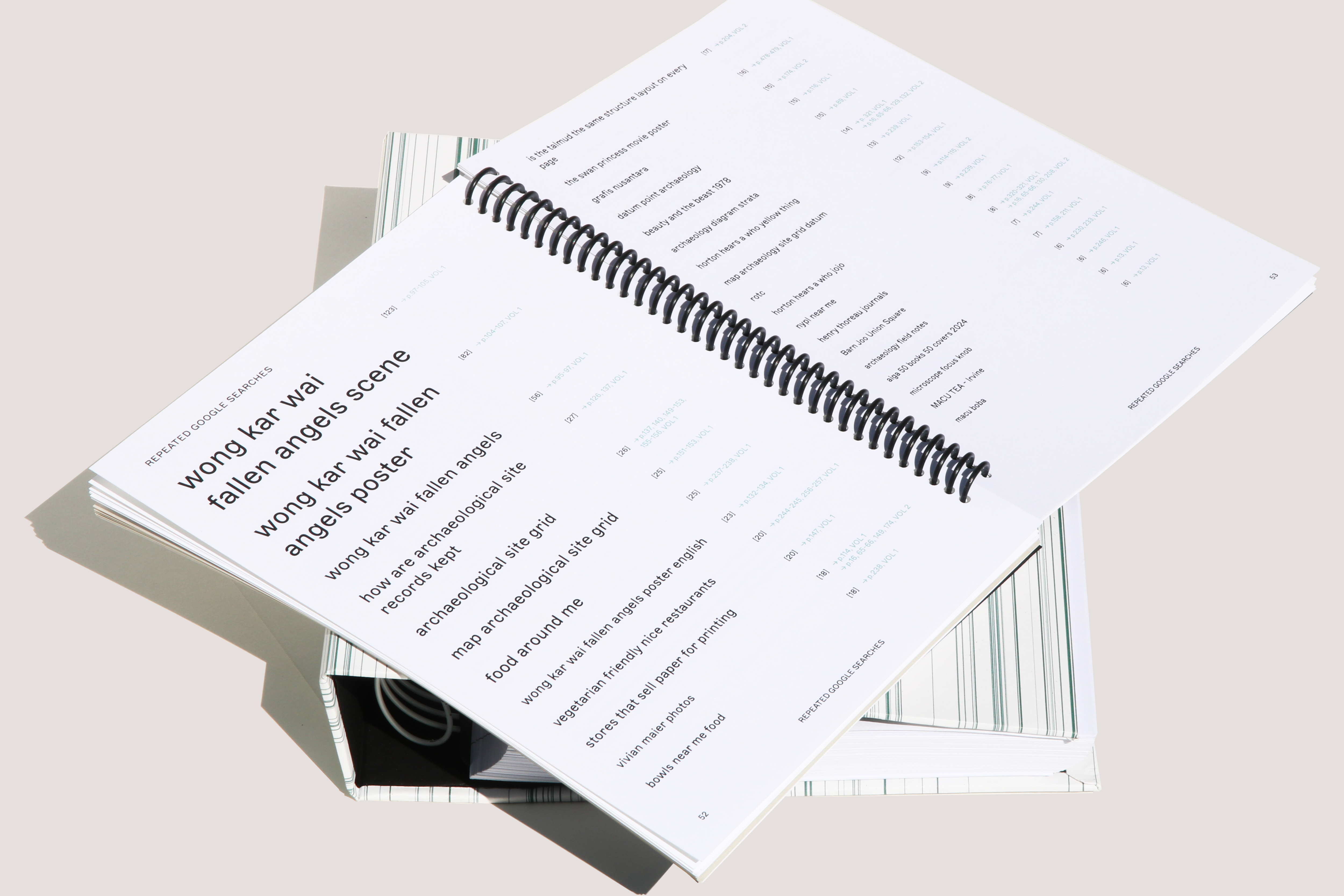
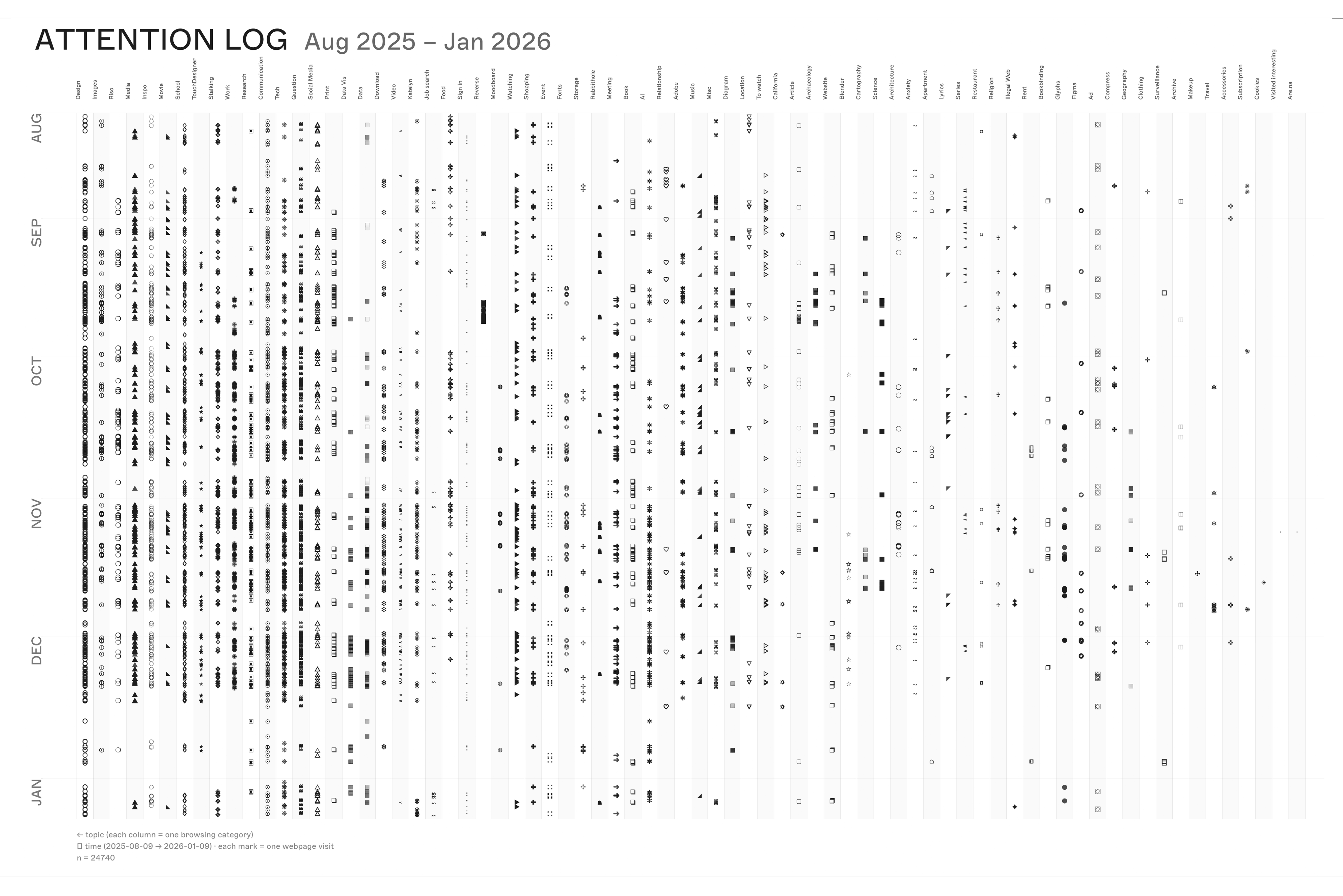
The visual system uses indexing, repetition, and categorization to transform personal data into a structured publication series across 72 unique topics.
All publications were generated using HTML, CSS, and Paged.js, using the browser as both design and printing tool.
Outcome
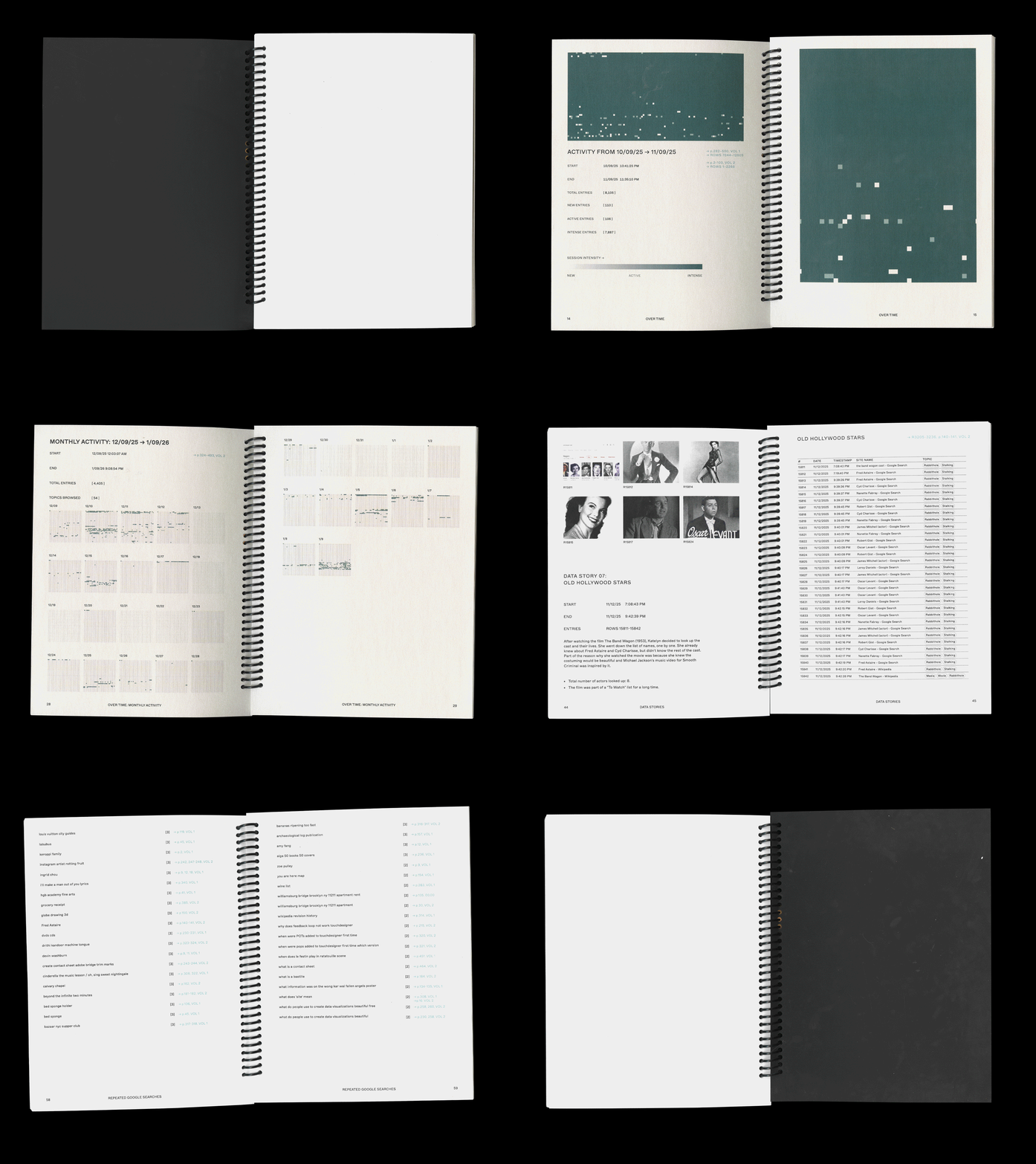
- Three printed volumes (including two 500-page index books and one data visualization book)
- A poster and supporting visualizations translating select data into public-facing formats
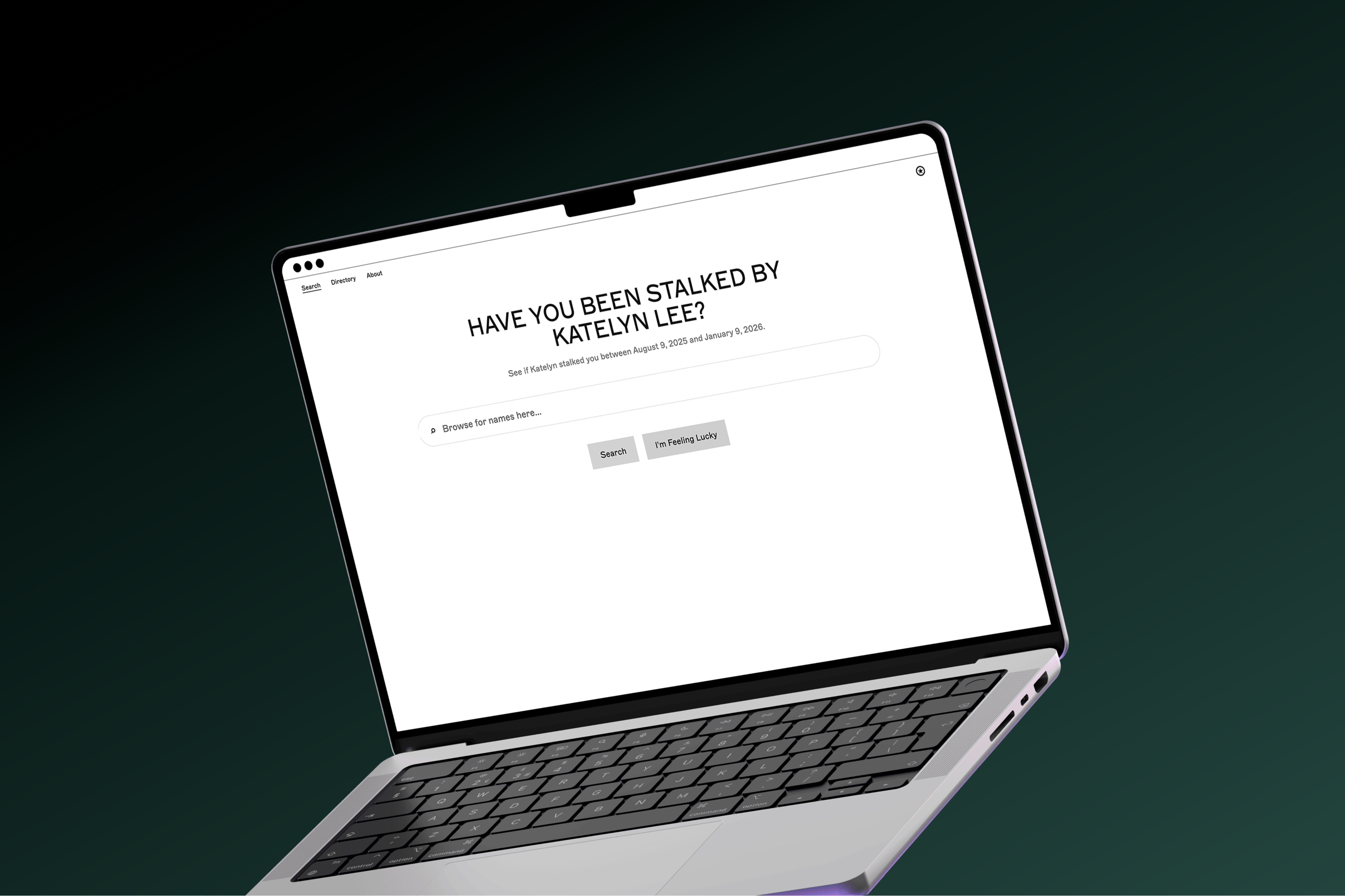
- A web-based project,
Have You Been Stalked By Katelyn Lee?,
extending the dataset into an interactive experience
Context
Role
Designer & Developer
Duration
8 months
Skills
HTML, CSS, Paged.js, p5.js, InDesign, Photoshop, Bookbinding
Collaborators
Elaine Lopez (Thesis Advisor)
Annotation
Each entry was manually categorized using a custom topic key, building a structured system through iterative tagging.
Data Collection
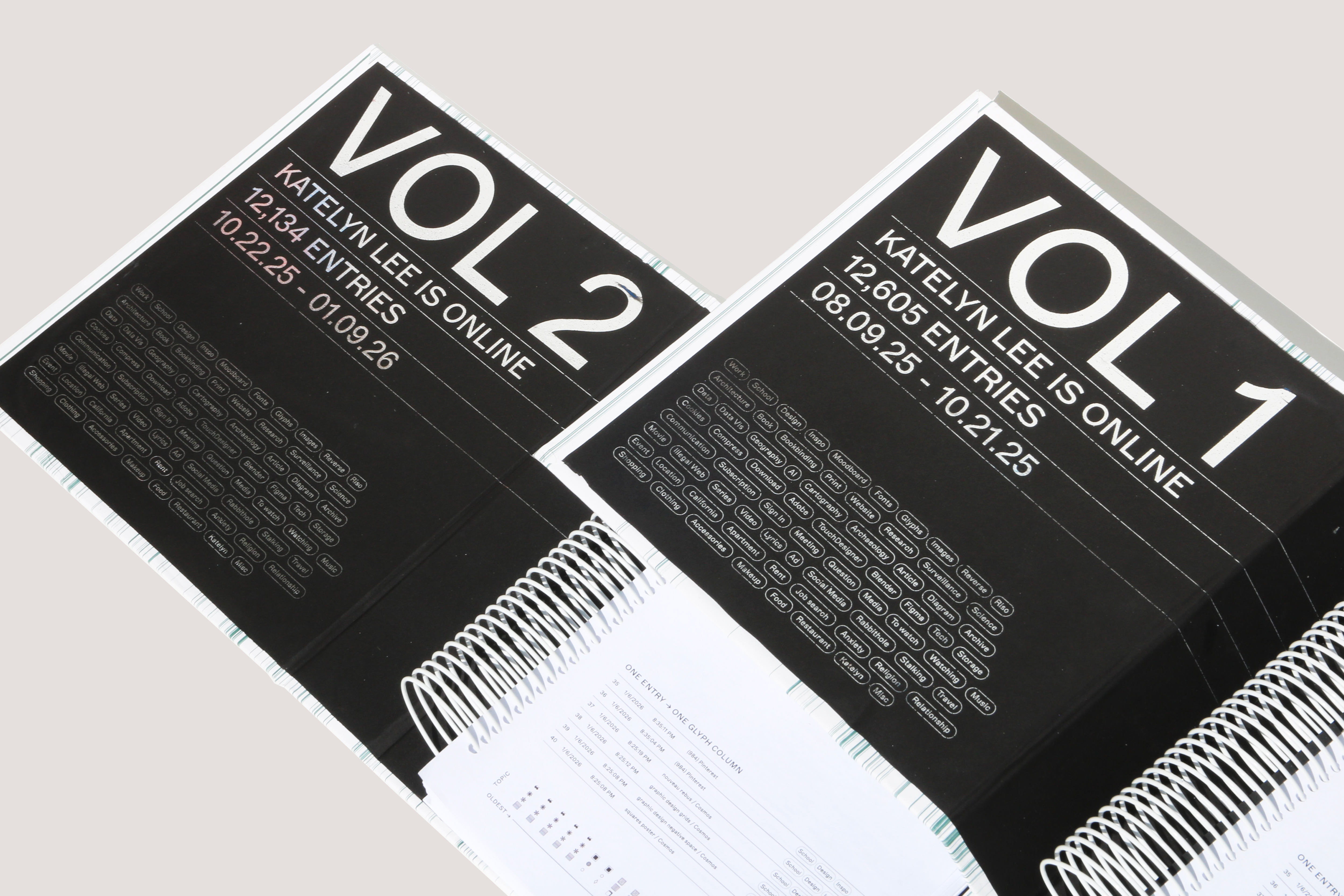
24,740 browser history entries were exported and compiled over six months.
Visualization
The third publication translates data into visual forms, contextualizing and humanizing patterns as moments of lived experience and relatability.
Covers
Each volume’s cover functions as a data visualization of its contents, translating the indexed material into a surface-level graphic. The exterior reflects the structure within, allowing the system to be read before the book is opened.
Reflection
The process of working with this dataset was overwhelming in scale, revealing volumes of activity I didn’t fully remember. It felt like accessing an offloaded drive of my memories—an incomplete but detailed record of behavior.
Beyond documentation, the project suggests that our digital traces do indeed construct versions of identity that are flattened, partial, and open to interpretation.
Rather than offering answers, it invites reflection on what is recorded, how it is categorized, and how we are ultimately perceived through data we don’t fully control.